Monday, July 25, 2011

Sometimes We Help Kill the Things We Love

Amy Winehouse (1983-2011)
In physics, there is something called "the observer effect."  This is when the act of observing an event alters the event being observed.  It comes into play when scientists want to observe the behavior of individual atoms or molecules, which can be influenced by the instruments used to record their behavior. 

For instance, the beam of light that might make the atomic event visible to the scientists produces enough energy to influence the atoms being observed.

In a sense, this means humans can perhaps never know the "pure" state of existence of the universe at its most basic level, since the attempt to know it changes it.

Something similar occurs in the world of artistic expression.

For example, would Amy Winehouse, who died July 23, have lived longer if she had never been discovered by the music industry and the popular media?  Her fame and fortune did not cause her emotional problems and her chemical addictions, but the pressures and chaos introduced into her life by stardom apparently made those problems worse.

The troubles of her life helped produce the music that many people loved, which is ironic enough.  Are we at some level happy that she was unhappy enough to produce the music that we enjoyed because it made us feel unhappy?

More ironic is that the music world loved her and that love likely sped up the self-destructive cycles that produced the power of her music and voice.

I wonder how much longer she might have lived if she had not become such an international sensation.  Suppose she had been an appreciated night club singer.  Suppose she had been able to make a living as a song writer and a performer without the pressures of music studio executives and concerts in large arenas.

A friend of mine made the perceptive statement that Winehouse's demons may have involved low self-esteem.  He speculated that the more praise and fame she received, the more pressure she felt to live up to a standard she believed was impossible for her to achieve.

Think of her as a flower.  Let's say some people find a flower they admire and wish to share with others, so they remove the flower from its original environment.  In its new location, many people can see and enjoy it, but it quickly dies -- so now no one can see it and enjoy it.  If the flower had just been left alone, it and the qualities that had made it attractive would still exist.

The observer effect.

Seraphine Louis (1864-1942)
This idea resonated with me because I had recently seen the French film Seraphine.  It tells the story of a gifted, apparently untrained painter, who was either prone to spiritual visions or schizophrenia.  Seraphine Louis was obsessively devoted to her art, especially since God and the Virgin Mary told her what to paint and how to paint it.  She was poor and worked several jobs in order to finance her art.

(I do not know that she was diagnosed as schizophrenic -- if that diagnosis even existed in her lifetime.  But her art shows a progression similar to the work of schizophrenics, such as Louis Wain: from relative simplicity to sublime intensity of detail.)

If the film is accurate in depicting her life, she did not seem to care whether people bought her works, although she took great pride in them.  The painting was the point, not the reception.

L'abre de Vie
But she was discovered by a German art collector who put her on a stipend that made it possible for her to quit her jobs and paint full time.  This resulted in some wonderful works, and it did save her from a life of grinding poverty.  But her life was so altered from its original trajectory that she seemed unable to cope with her new circumstances.

She wound up in an insane asylum, and there she never painted again.

The German collector rightful recognized her wonderful talents, and he tried to make her life better, but was she better off for it?

One could say that Winehouse's fame and wealth created opportunities for her to seek help for her various problems.  If she had remained relatively obscure, would she have had the same opportunities?  One could say that without the interest of an art collector, Seraphine would have died poor and most likely homeless.  His attention made it possible for her to live with some comfort, although without the art.  But suppose he had not altered her life as much as he did?  Perhaps she might have coped better.

We cannot know which path would have been better for Winehouse and Seraphine, since we know only the trajectory that came after the observer effect.  While some objects are large enough to withstand the influence of their measurement, others are too small to withstand the attention.  Similarly, some artists can withstand fame and fortune, but others are too vulnerable.

I think cases like Winehouse and Seraphine do show that sometimes it is best for an artist, like that flower, to remain close to the soil that produced her.  Perhaps if their lives had been less altered, they might have lived longer to enjoy and develop their talents.

Monday, July 18, 2011

Grandchild Fever Is a Threat to Marriage

"The Marriage Vow" has been in the news a lot lately, partly because presidential candidates Michele Bachmann and Rick Santorum signed it and partly because of its incorrect and outrageous suggestion that African American children were better off during slavery than today.

The vow, produced by a conservative advocacy group, also has been in the news for some of its claims about homosexuality and the threat it supposedly presents to American society.

The statement concerning slavery apparently has been removed.  An author of the source cited by the vow says her research was misused.  The document's clearly homophobic statements remain. 

One threat to the "Institution of Marriage" not mentioned is this: mothers with adult daughters.

We have heard of the five stages of grief.  I think we could say there are Four Stages of the Hunger for Grandchildren.

1. The mother wants her grown daughter to marry a nice man with a good job and then have children.

2. The mother encourages her daughter to have a child with her boyfriend.  You don't need to be married before you start a family.  Things are different today from when I was your age.  He's a nice boy.  You can live together, have the baby, and maybe then you'll get married.

3. The mother encourages her daughter to have a child with her boyfriend, even if the daughter is not sure how serious she is about him.  You can live at home.  If things work out between you two, then you can get married.  In the meantime, you and the baby can live here with us.

Murphy Brown, CBS, 1988-1998
4. The mother encourages her daughter to have a child.  Period.  You have a good job.  Who needs a husband?  Murphy Brown didn't.  Just give me a grandchild!  I'm not getting any younger, you know!

Monday, July 11, 2011

Will & Kate: Fairy Tale vs. Fairly Normal

At LAX (Photo by Bauer Griffin)
Royal newlyweds William and Kate visited Southern California recently, if you hadn't heard.  Among other things, they attended a gala held by the British Academy of Television Film and Arts and a polo match in Santa Barbara.  They also took time to visit Inner City Youth Arts Project in downtown Los Angeles and make some handcrafts with the kids.

I do not know if they were allowed many authentic L.A. experiences.  I doubt they dined at a taco truck.  I doubt they were allowed to get stuck in traffic on the 101.

Did they order a mochachino at Starbucks from a handsome young man who played College Student #2 in a recent episode of Criminal Minds?  Did they drop by Venice Beach to sample our fine medical marijuana dispensaries?  Were they tailgated and then flipped off by some dude on a cellphone in a BMW?  Did they take a yoga class from a tattooed woman named Star Child?

Youth Arts Project (Photo by Bauer Griffin)
The television stations were abuzz with their visit, and in all that chatter I heard those words again: "fairy tale" and "storybook."

Cinderella is stuck in the minds of the journalists and bloggers covering Will and Kate.  They are determined to describe the young couple's romance and wedding as a "fairy tale" or a children's "storybook."

Perhaps if Prince Charming had met Cinderella in a college classroom instead of at the ball.  (They attended the University of St. Andrews in Scotland.) 

Perhaps if Prince Charming had known Cinderella for nearly a decade before marrying her.  (They even were roommates for awhile before they started dating.)

God Save the Queen
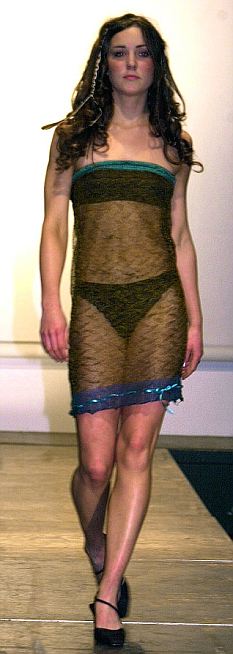
Perhaps if instead of seeing a beautifully transformed Cinderella on the dance floor he had seen her on a fashion runway in a see-through dress.  (Prince William was on the front row of a charity fashion show in 2002.)

Perhaps if Prince Charming and Cinderella had broken up for awhile before getting back together and then getting married.

The reporting of their story is an example of how humans often times make sense of their world with the narratives they have in their heads, even when the two things -- reality and the narrative -- do not match up that closely.  The Cinderella story in the minds of journalists and the public overpowers the actual details of the couple's lives.

In many ways, their romance sounds decidedly NORMAL.  A fairy tale requires the presence of magic -- hence, the fairy in the title.  Their story sounds more like a Sandra Bullock movie than a fairy tale.

And they are better off for that.

Yes, Kate Middleton had no royal connections before the wedding, so that makes her a "commoner."  And, yes, William is a prince, so it becomes easy to call him Prince Charming.  And we cannot deny that neither of them will have a normal life from now on.  But their relationship sounds so much more healthy and human than the usual storybook relationship.

No magical transformations.  No beasts turned into men.  No peasants turned into princesses.

Just two young people who got to know each other pretty well before getting married.

Monday, July 4, 2011

If Everything Is War, There Can Be No Peace

How many wars is in the United States of America involved in?

One in Iraq.  One in Afghanistan.  Right?

But what about the war on Christmas?

The war on the middle class?

The war on tradition?

The war on the family?

The war on success?

The war on welfare?

The war on freedom of expression?

The war on women?

The war of the godless liberals against America?

The war of the religious right against America?

The war on sex?

Look through the bookstore and you will see that all of these and more are currently being fought in America and among Americans.

"In war, the first casualty is the truth."

Reportedly Aeschylus said this in ancient Greece.  I tend to agree with him, including when it comes to using warfare (and victimhood) to frame one's polemic.  This hyperbolic rhetoric, from the left or the right, makes objectivity, and therefore good judgement, difficult.

I have taught many college English classes, and I have tried to teach my students to summarize counterarguments fairly and honestly.  But the "enemies" would be hard pressed to recognize themselves or their beliefs in this war rhetoric.  They are made to look stupid, mean, or both.  There is little effort to be fair to the opposition in this rhetoric because it is not intended to be read by the opposition.

It is screeching to the choir.

The book covers I have featured call attention to a war on something that we assume the author holds dear.  The publisher assumes the target audience will hold this thing dear as well and will want to know who is attacking a thing it values.  The book titles never call for a war FOR something.  The strategy is for the author to convey himself as a victim -- Help! I am being attacked! -- and then motivate readers to take defensive action with him.

Taken together, these book titles (more than I have featured here) suggest that everyone is waging war against everyone else.  But we can't ALL be victims.

This war rhetoric can lead to some absurd claims of victimhood.  This came to mind recently when I saw the subtitle to Joe Kernan's new book.  The main title is Your Teacher Said What?  The subtitle is Defending Our Children Against the Liberal Assault on Capitalism.  Gee, I thought, if capitalism is under attack, someone should tell the capitalists -- they seem to be doing rather well.

For instance, a recent study from Northwestern University professors indicates that corporate profits have risen dramatically while wages have been stagnant and unemployment has remained high.  In fact, the study indicates, corporations have captured 88 percent of all of the income growth since the economic recovery began in June 2009.

I am completely prepared to accept that a bias against some corporations and some aspects of capitalism exists in the classroom.  I teach literature at a university, and I have seen that bias.  But it is a stretch to characterize this classroom bias as some kind of widespread assault against capitalism.  And Kernan describes attacks on capitalism outside of the classroom; he mentions it coming from Hollywood and from Washington, D.C.  If it is an assault, we would have to say it has been a rather ineffective one.

At best, "war on" has become a cliche, a phrase emptied of meaning from overuse.  At worst, it is delusional or disingenuous.

This war rhetoric also is a problem because it is a dead end.  Once you say you are at war with someone, you have indicated no room for resolving conflict through cooperation or compromise -- hallmarks of a healthy democracy.  Instead, your "enemy" is trying to "destroy" you, so you need to fight back and you will be justified in "destroying" him.  This leads to the United States getting paralyzed by posturing and bickering.  The dialectic we need -- thesis, antithesis, synthesis -- becomes simply thesis and antithesis.

This is why I find Ann Coulter boring.  I know she tries to be shocking.  Her rhetorical style depicts all of her opponents as not just foolish but dangerously stupid and morally corrupt.  Demons, in fact.  But demons are evil in their nature and cannot be persuaded to behave differently.  This perspective not only kills any sense of objectivity and truth; it also locks each side into eternally opposed stances.  This perspective is static.  Unchanging.

That is why I say it is boring.  It is predictable.  It is easy.  It does not lead to change.  It does not lead to solutions. 

So, to all of those other folks running around with your hair on fire: Yawn.

The poet Ezra Pound declared, "Make it new!"  It is the writer's job not only to explain the world but to help readers see that world in a new way.  Perhaps there was a time when this war trope was new and helped us understand things from a fresh perspective.  But now it is as useful as a flat tire.  It is worn out and needs to be replaced.

Monday, June 27, 2011

Adventures in Heidi-reality II: Postmodernism and Plastic Surgery

“I love Los Angeles. I love Hollywood. They're beautiful. Everybody's plastic, but I love plastic. I want to be plastic.” – Andy Warhol

As I wrote in my previous entry, “Adventures in Heidi-reality,” when I saw a tabloid article about Heidi Montag and the continuing saga of her G-cup breast implants, two things came to mind.

Still Life with G Cups (2010)
OK. Four things came to mind.

One of them was Umberto Eco and another was Tom Wesselmann.

Eco was the Italian cultural critic who coined the word “hyperreality,” which seemed to me useful for describing not just Montag’s augmented assets but the whole trend for anatomical enhancement among female celebrities – which can be found in the general population (at least those who can afford it).  The hyperreal is an example of the fake which becomes more desirable than the real.  It is perceived as “more real” than the real.

That this D-cup desire has reached the street is illustrated in the new movie Bad Teacher, in which Cameron Diaz plays a school teacher going to great and improper lengths to purchase a “boob job” so she can land the sugar daddy of her dreams.

Wesselmann, on the other hand, is famous for a series of paintings called Great American Nude.  As I contemplated Montag, I realized that Wesselmann was really on to something way back when in the 1960s.  He foresaw American popular culture’s obsession with an idealized, plasticized female breast.

When Americans think of the early 1960s, they probably think of Happy Days and Mad Men.  They think about Joanie loving Chachi and not fire-engine red nipples on large canvasses.  They think about Don Draper smoking cigarettes – lots and lots of cigarettes – and not a small group of artists in New York City giving birth to Pop Art.

Great American Nude #38
Actually, Madison Avenue and Pop Art go hand in hand, since many of the Pop artists used the visual language of advertising.  Although Wesselmann resisted the Pop Art label for himself, early in his career he was very much associated with it.  Why he was is clear in Great American Nude #38 from 1962.

He combines longstanding artistic conventions with images from American magazines. The basic structure of #38 is that of an odalisque, a painting tradition depicting a reclining nude woman.  Originally these paintings represented attractive young women from a Turkish harem, appealing to a European sense of the exotic and erotic.  But odalisque conventions were transferred to non-harem settings, such as the famous female nude portraits by Modigliani and Gauguin. 

Odalisque and Slave (1839)
Wesselmann’s nude woman reclines in much the same way as the woman in Odalisque and Slave by Jean Auguste Dominique Ingres, but she also seems to have been literally cut from a magazine ad and then pasted onto the canvas – after he removed her bikini.  Or she is a pin-up girl clipped from a men’s magazine.

This mash-up of high and low culture – the odalisque tradition with a Playboy centerfold – is a hallmark of postmodernism.   

Great American Nude #58
Wesselmann’s borrowing from advertising culture is even more apparent in Great American Nude #58 from 1965.  Here, the entire image could have been taken from a magazine ad -- except Wesselmann has again removed the clothing from the female and again has revealed startling tan lines. (I think I could do a whole blog entry on the meaning of tan lines.)  The revelatory nature of her nudity suggests Wesselmann’s message, if there is one: Beneath the surface of the advertisement’s message, sex is being used to sell the product.

But as his work developed, his nudes became more stylized and the breast became a major focus.  To become stylized, a sign or symbol loses detail.  One or two elements gain in their emphasis and others are de-emphasized or even disappear.  This process is true for what semiotics calls an "icon."  An icon tends to be created when a part of a person or object comes to stand for the whole. 

Great American Nude #85
For example, take Wesselmann’s Great American Nude #85 from 1966.  Note how few lines there are, how few details.  Red lips, red nipples, and a handful of curves have come to the foreground and other details have disappeared.  This is what we would call “an economy of style.”  Saying as much as possible with as few elements as possible.

Great American Nude #38 creates the sign of “visually and sexually appealing nude woman” with many more lines, curves and colors (we see the woman’s entire body, for instance) .  Great American Nude #85 creates the sign for “visually and sexually appealing nude woman” with fewer lines, curves, and colors than does Great American Nude #38.  The breast, or even just the nipple, becomes iconic of "woman," but also sex and pleasure.  Advertising and Hollywood then, in turn, associate that icon with their products.
 
Seascape
By 1967, the breasts become even more pronounced, perhaps swelling in relation to the amount of meaning they contain.  Wesselmann also increased his focus on the individual elements of the female nude until some works depicted just one body part to convey the erotic ideal.  Lips.  A breast.  A foot.

So what does this have to do with Heidi Montag?

I think we can view an obsession with cosmetic surgery as a kind of stylizing of the human body.  In order to achieve some ideal of human physical beauty, certain aspects get emphasized over others – cheekbones, chin, breasts, lips, etc. – sometimes obsessively so.  As with Wesselmann’s increasingly stylized female nude, the pursuit of the ideal human body often eliminates the details that had existed before.  We could say that human “flaws” (or individuality) reside in the details – wrinkles, for instance, or curves that deviate from the ideal.

Those are removed in the pursuit of the ideal.  As the details are lost, the expressions of the ideal begin to resemble each other.  Botoxed faces lose their wrinkles, but also their expressiveness.  As someone who lives in Southern California, I think I can say with some confidence that augmented breasts really do start to look alike.

In Pop Art and the Contest over American Culture, Sara Doris states that post-modern art depicts not encounters with the real but encounters with mediated images, with representations of the real.  (Hyperreality is about preferring representations over the real.)  She cites another critic, Douglas Crimp from 1977:

To an ever greater extent, our experience is governed by pictures, pictures in newspapers and magazines, on television and in the cinema.  Next to those pictures, firsthand experience seems to retreat.

So women in Hollywood, and to an extent the rest of the country, begin to imitate, through surgery, those images that surround us.

Through its reptition from Madison Avenue and Hollywood, the breast became increasingly iconic for "sex and pleasure."  So a celebrity, such as Montag, could associate herself more closely and immediately with "sex and pleasure" by emphasizing her breasts.
Tony's hangout.

Montag is not alone in this career move.  The Bada Bings of the world are filled with examples, and several web sites are devoted to chronicling which female celebrities have implants.  And it should be noted that Montag has apparently followed through with her desire for breast reduction surgery (recent pics here).

Doris discusses post-modern art’s penchant for imitating advertising imagery and borrowing from other traditions and artists (in a way similar to contemporary musical artists sampling the works of others).  She describes this as a rejection of modernism’s “fetishes of authenticity and originality, as neither form nor subject were unique to the artist.  Thus art making became an act of self-negation rather than self-revelation or self-realization.”

That sounds harsher than I would like.  I do not judge Montag for what she did.  It is her body.  She is free to do with it what she wants.  As is any human.  I am not judging anyone, male or female, who elects to have cosmetic surgery.  I simply am trying to understand the origin of and the influences on the recent mania for mega-breasts.  And I am not saying it started with Wesselmann's art, but I think he somehow saw it coming.

I realize that Montag probably would disagree with applying Doris’s assessment to her.  She might say that her cosmetic surgeries (she has had several) helped her realize her potential rather than negate her individuality.  I also realize she is not indicative of most people who have cosmetic surgery.  A nip or tuck does not make one Cher.

But the extreme lengths to which she went do illustrate, I believe, something in the national consciousness about the beautiful and the erotic.  The ideal being pursued by some people has its origins in our media-saturated lives – or perhaps more accurately, its origins are in our media more than our lives.